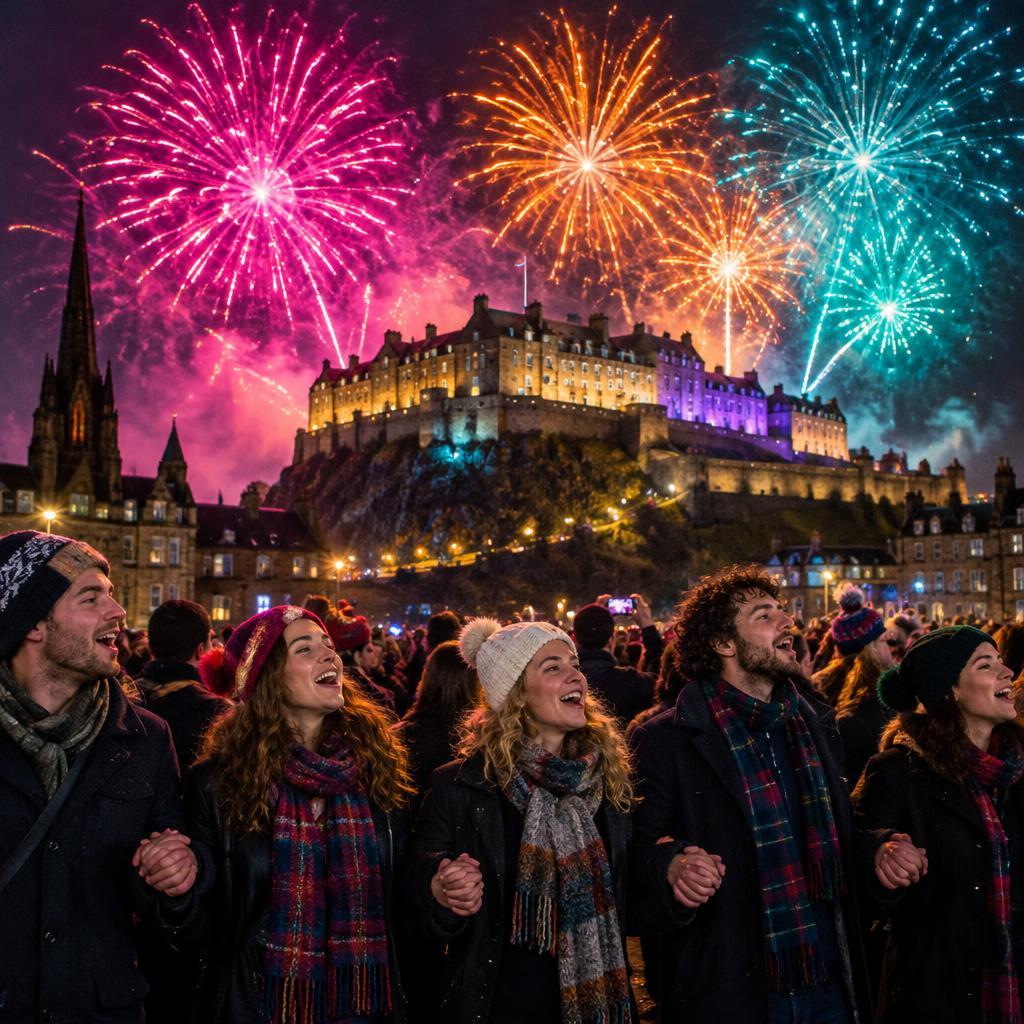
Hogmanay is the Scottish word for the last day of the year, and Scotland celebrates it like nowhere else — with street parties, fire festivals and a famous song.
A bit of history
For centuries Christmas was discouraged in Scotland after the Protestant Reformation, so New Year became the main winter celebration. Many customs come from Norse and Celtic winter festivals that welcomed the return of the light.
Traditions
First-footing
The first visitor after midnight brings luck — ideally a tall, dark stranger carrying coal or shortbread.
Auld Lang Syne
At midnight everyone crosses arms, holds hands and sings Robert Burns' famous song.
Fire festivals
Edinburgh holds a torchlight procession and towns swing fireballs through the streets.
On the table
- Shortbread
- Black bun (fruit cake)
- Steak pie
- A wee dram of whisky
Key vocabulary
- first-footing
- being the first person to enter a home in the New Year
- auld lang syne
- Scots for 'old long since' — days gone by
- resolution
- a promise to yourself to change something in the New Year
- countdown
- counting backwards to zero, e.g. before midnight
- wee
- (Scottish) small
How Hogmanay changes from country to country
United Kingdom
Scotland's Hogmanay is legendary; London has fireworks over the Thames.
Ireland
Parties and the Countdown Concert in Dublin.
United States
The ball drop in Times Square, New York.
Canada
Polar bear swims on New Year's Day in icy water!
Australia
Among the first in the world: Sydney Harbour Bridge fireworks in summer heat.