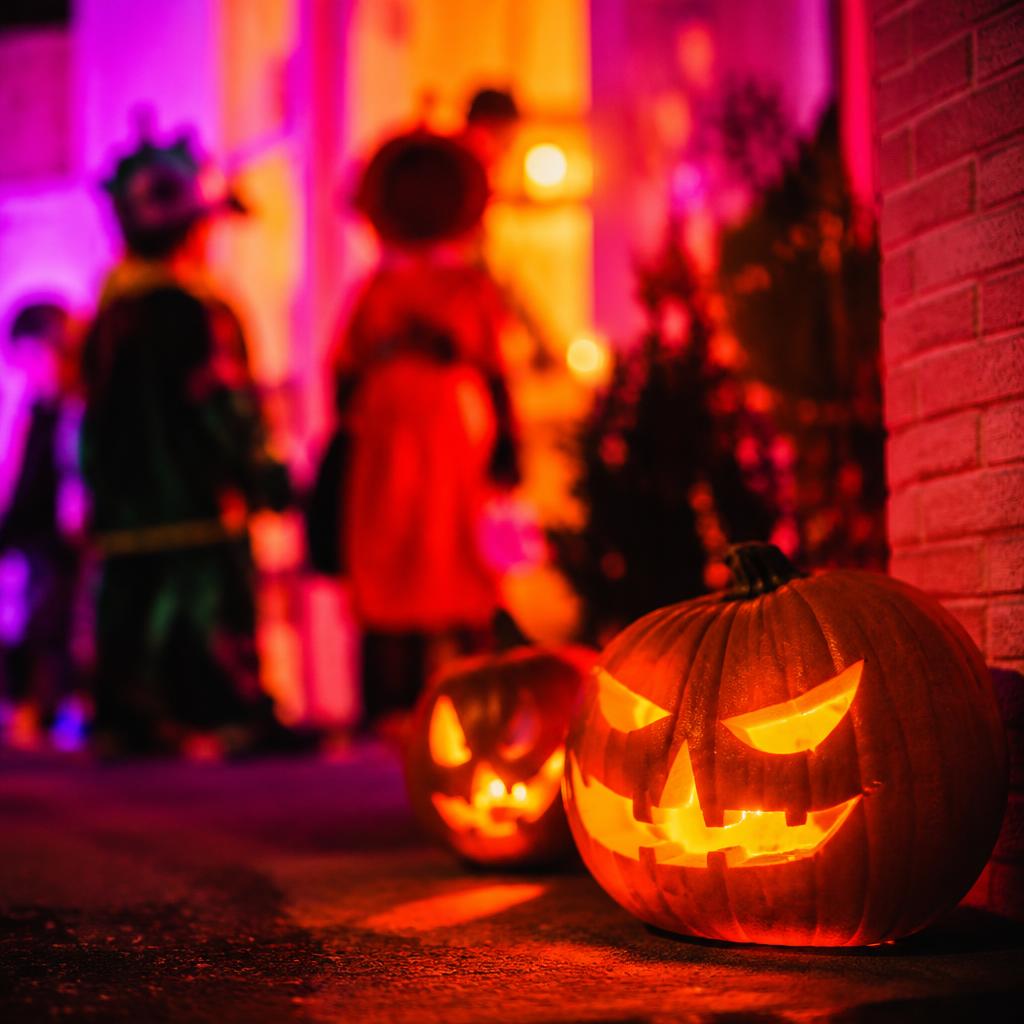
Halloween is a night of dressing up, carving pumpkins and knocking on doors for sweets. It has ancient roots but a very modern sense of fun.
A bit of history
Halloween comes from Samhain, a Celtic festival marking the end of summer, when people believed the boundary between the living and the dead grew thin. The name means 'All Hallows' Eve' — the evening before All Saints' Day. Irish and Scottish immigrants took the custom to North America.
Traditions
Trick-or-treating
Children in costumes go door to door asking for sweets.
Carving pumpkins
Hollowed-out pumpkins with scary faces become glowing jack-o'-lanterns.
Costume parties
Adults dress up as ghosts, witches, zombies and pop-culture characters.
On the table
- Candy apples
- Pumpkin pie
- Barmbrack (Irish fruit bread)
- Sweets and candy
Key vocabulary
- trick or treat
- what children say when asking for sweets at the door
- jack-o'-lantern
- a pumpkin carved with a face and lit from inside
- spooky
- strange and a little frightening
- haunted
- visited by ghosts
- costume
- special clothes worn to look like someone or something else
How Halloween changes from country to country
United Kingdom
Increasingly popular trick-or-treating and costume parties, but quieter than in the US.
Ireland
Where it all began: bonfires, fireworks and barmbrack with a ring inside.
United States
A national obsession: decorated houses, haunted houses and pumpkin patches.
Canada
Very similar to the US — kids trick-or-treat even in the snow.
Australia
Growing in popularity, though it falls in spring and some see it as 'too American'.