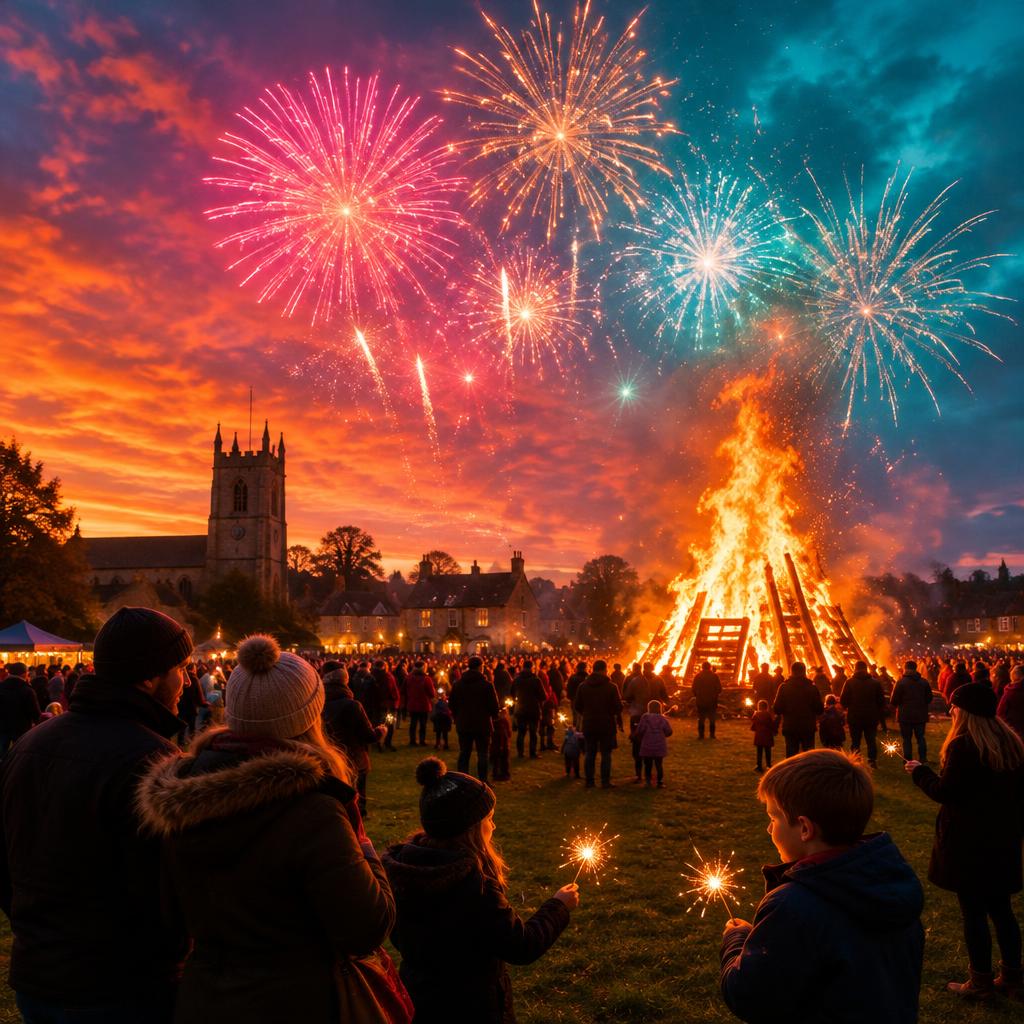
Also called Guy Fawkes Night, this British tradition lights up chilly November skies with bonfires, fireworks and sparklers.
A bit of history
In 1605 a group of conspirators, including Guy Fawkes, planned to blow up the Houses of Parliament and kill King James I. The Gunpowder Plot failed when Fawkes was caught guarding barrels of gunpowder. Londoners lit bonfires to celebrate the king's survival, and the custom has continued for over 400 years.
Traditions
Bonfires
Towns and villages build huge bonfires on fields and greens.
Burning the guy
A stuffed figure called a 'guy' is placed on top of the bonfire.
Fireworks displays
Local councils and clubs put on public fireworks shows.
On the table
- Toffee apples
- Parkin (ginger cake)
- Jacket potatoes
- Toasted marshmallows
Key vocabulary
- bonfire
- a large outdoor fire, often for a celebration
- sparkler
- a hand-held firework that gives off bright sparks
- plot
- a secret plan to do something harmful or illegal
- gunpowder
- an explosive powder
- guy
- a model of Guy Fawkes burnt on the bonfire
How Bonfire Night changes from country to country
United Kingdom
Bonfires and fireworks across Britain; Lewes in Sussex holds famous torch parades.
Ireland
Not celebrated; Ireland's bonfires are on Halloween instead.
United States
Unknown to most Americans.
Canada
Only a few communities in Newfoundland keep the tradition.
Australia
Once common, now rare because fireworks are restricted.