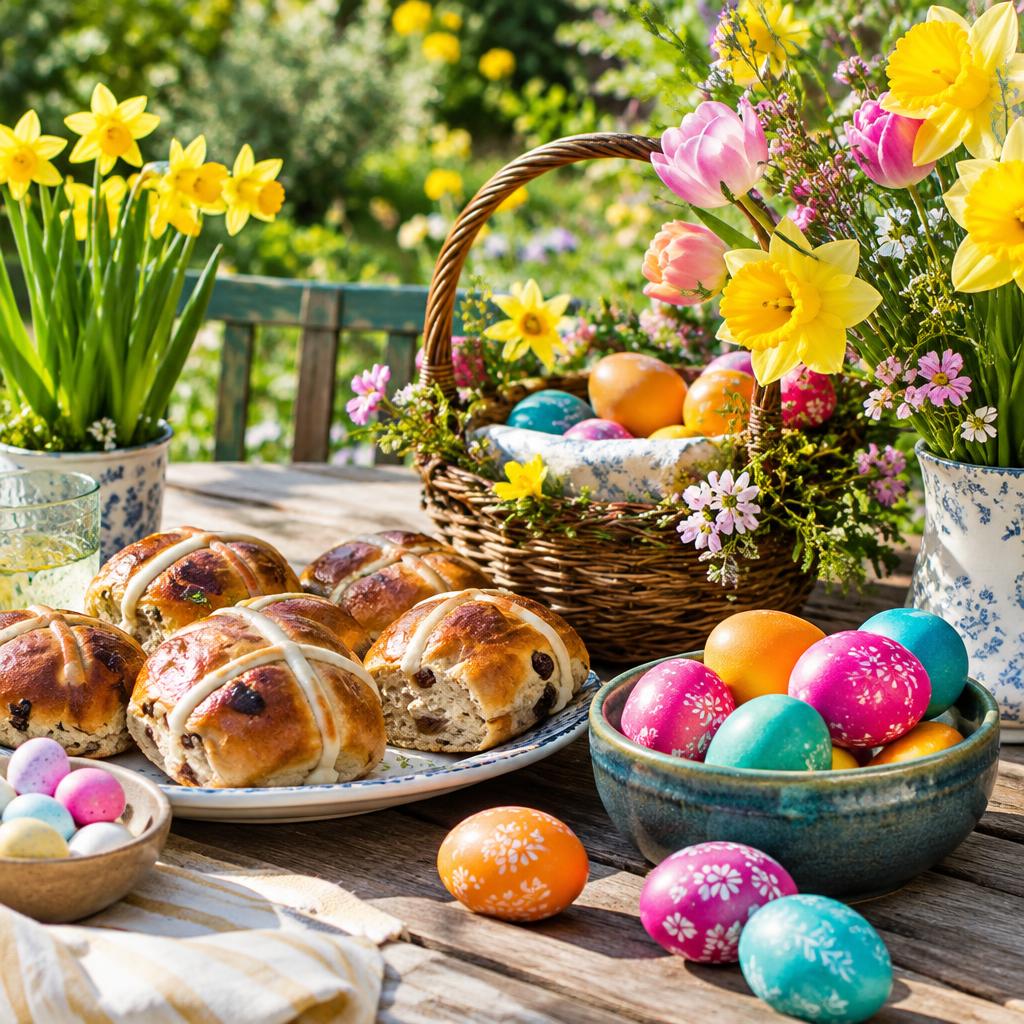
Easter is the most important Christian festival, celebrating the resurrection of Jesus. For many families it is also a joyful welcome to spring.
A bit of history
Easter falls on the first Sunday after the first full moon following the spring equinox, so its date changes every year. Eggs have long symbolised new life, and the Easter Bunny arrived with German settlers in America in the 1700s.
Traditions
Egg hunts
Children search gardens and parks for hidden chocolate eggs.
Egg rolling
Families roll decorated eggs down hills — there's even one at the White House.
Bank holiday weekend
In the UK, Good Friday and Easter Monday are public holidays.
On the table
- Hot cross buns
- Simnel cake
- Roast lamb
- Chocolate eggs
Key vocabulary
- egg hunt
- a game in which people search for hidden eggs
- hot cross bun
- a sweet spiced bun marked with a cross, eaten on Good Friday
- bank holiday
- a public holiday in the UK when banks and offices close
- Lent
- the 40 days before Easter, traditionally a time of fasting
- spring equinox
- the day in March when day and night are equal in length
How Easter changes from country to country
United Kingdom
Four-day weekend (Good Friday to Easter Monday), hot cross buns and egg hunts.
Ireland
Religious services and family meals; Easter Monday is a bank holiday.
United States
The Easter Bunny brings baskets; egg roll on the White House lawn. No Friday holiday.
Canada
Good Friday is a holiday; chocolate and maple treats at family brunches.
Australia
An autumn festival! The Easter Bilby, a native animal, often replaces the bunny.